After the Shutter: Before & After
There is a common idea that photography is about capturing exactly what was standing in front of the camera.
Sometimes it is.
But that isn’t really how I see photography.
For me, making the photograph begins before I ever raise the camera. Something has already caught my attention—the light, an old building, a detail, a color, a shape, or simply a feeling that makes me stop and look twice.
The camera records what is there. The photograph I finish is my interpretation of what I saw.
And that is where post processing comes in.
The Camera Doesn't Always See What I See
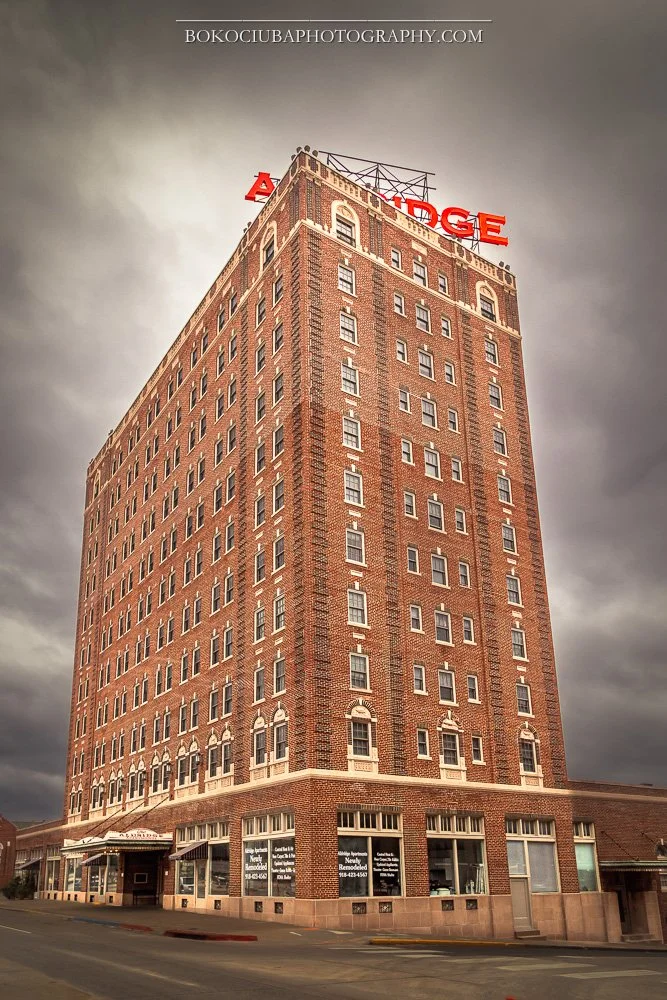
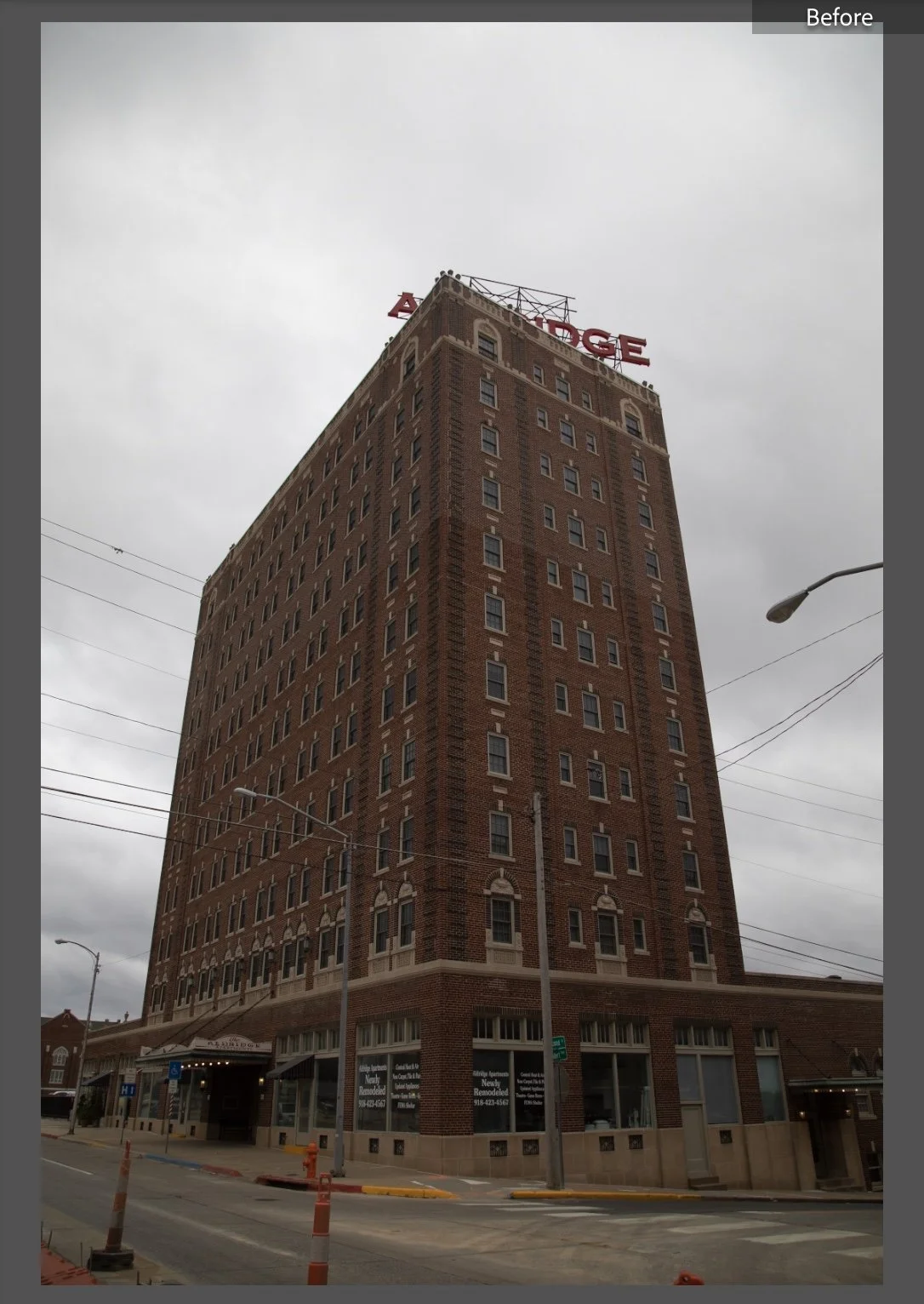
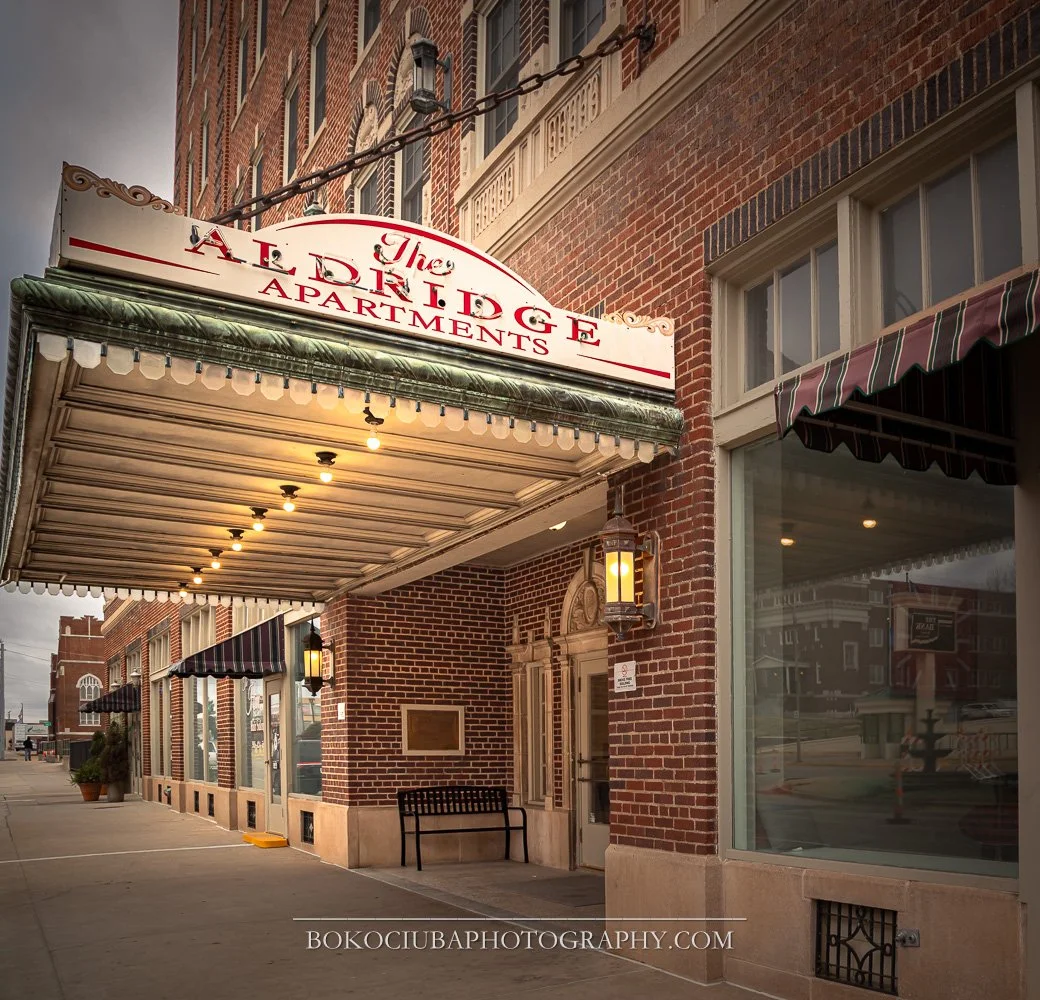
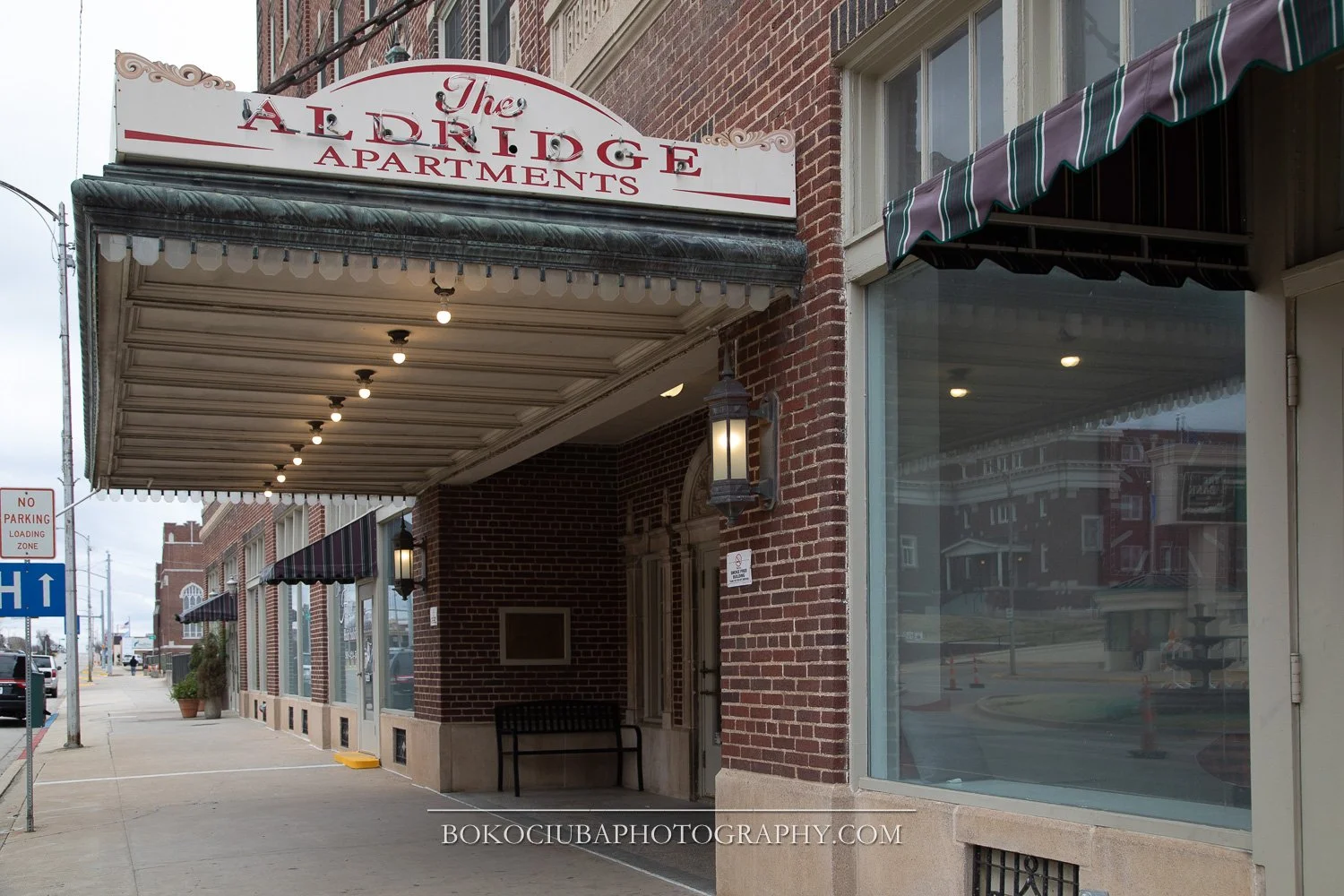
On a gray Oklahoma afternoon, an old brick building may look rather ordinary straight out of the camera. The sky may be much brighter than the building. Electrical wires and street signs compete for attention. Colors can look flat. Shadows may hide wonderful architectural details. I notice the warmth of the old brick. I see the repeating windows climbing toward the sky, the enormous ALDRIDGE sign perched proudly on top. I see the old entrance glowing beneath the marquee and those wonderful lanterns that look as though they belong to another time.
That's the picture already forming in my head.
Post processing gives me the tools to bring the photograph closer to that experience and none of these decisions is random.
Good post processing looks easy when it's finished. but getting there isn't always so easy. 😄
Photography requires learning quite a bit after the shutter clicks—Lightroom, Photoshop, masks, layers, selections, color, contrast, perspective correction, sharpening, noise reduction and, perhaps most importantly, learning when to stop.
That last one can be the hardest.
The software is simply another tool. Knowing what the tools do is technical skill. Knowing why and when to use them is the artistic part.
I don't want every photograph brighter, sharper, more colorful and more dramatic simply because the software allows me to do it.
I want the processing to serve the subject.
Before & After
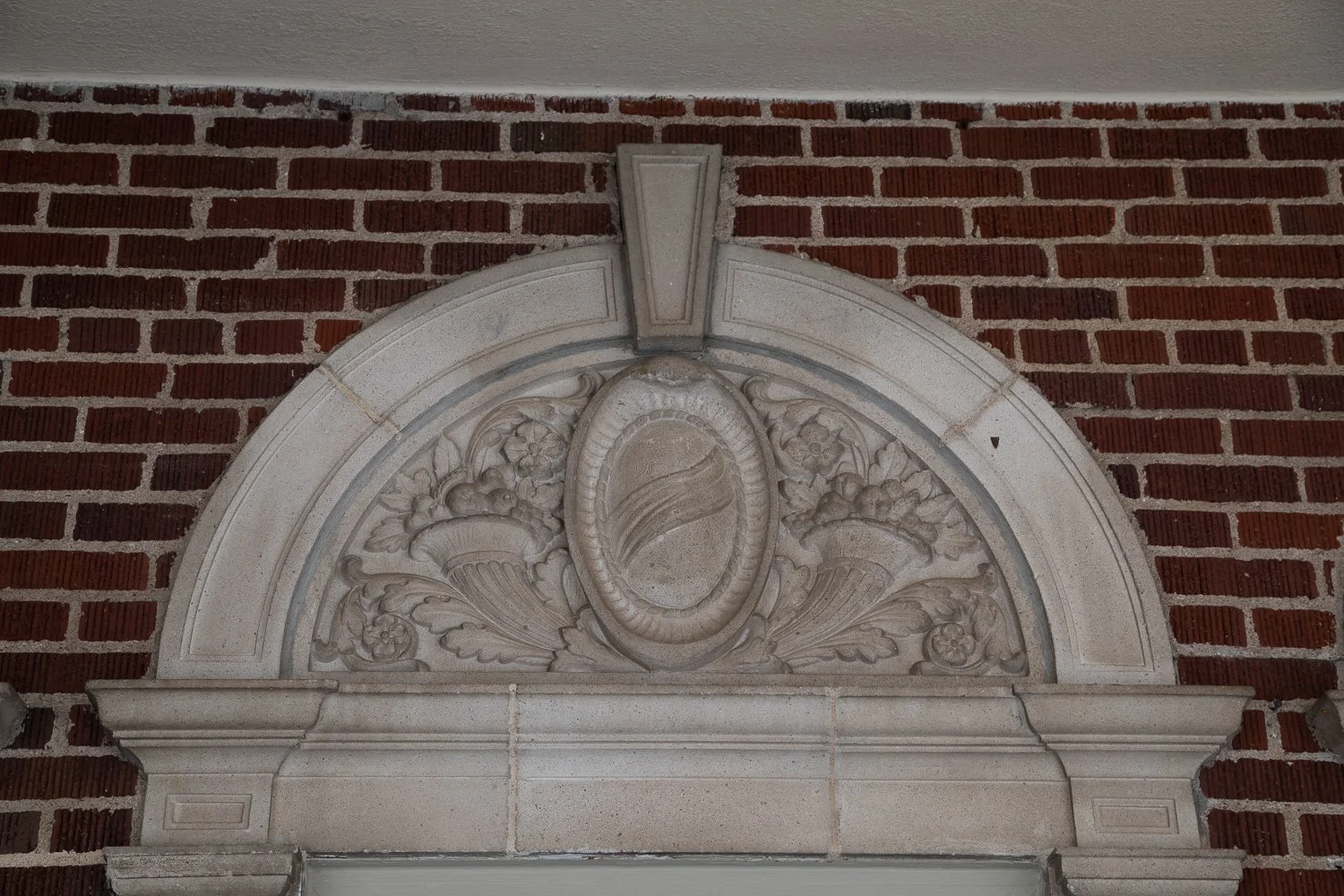
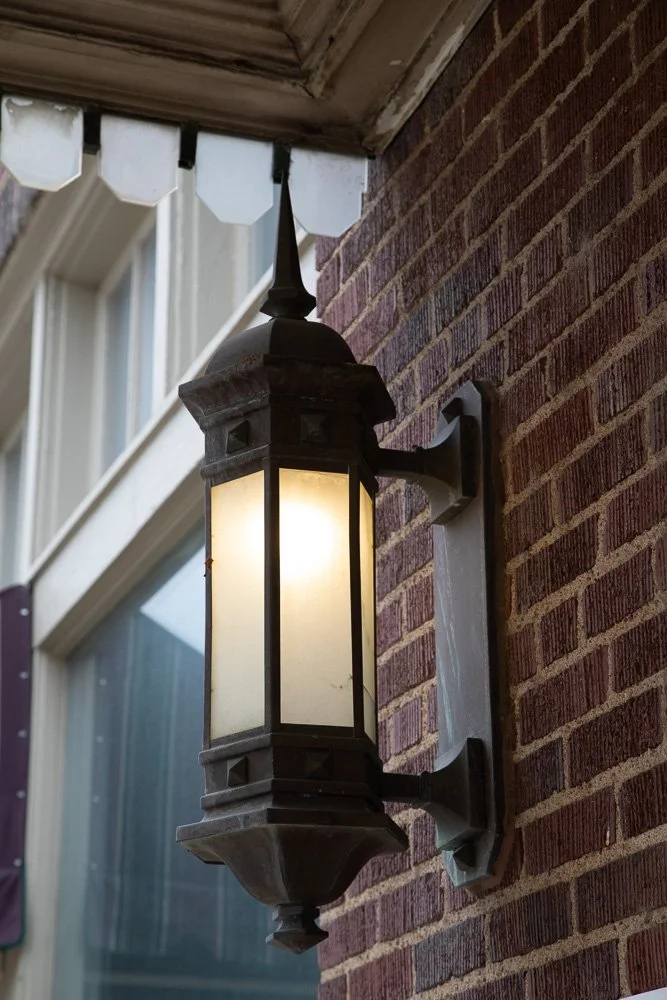
The camera captures my starting point. The before.
Then comes the second half of making the image.
Post processing is where I bring that vision forward. There’s a lot of skill and learning behind it, but the goal is simple: to make the finished image feel the way I saw it.
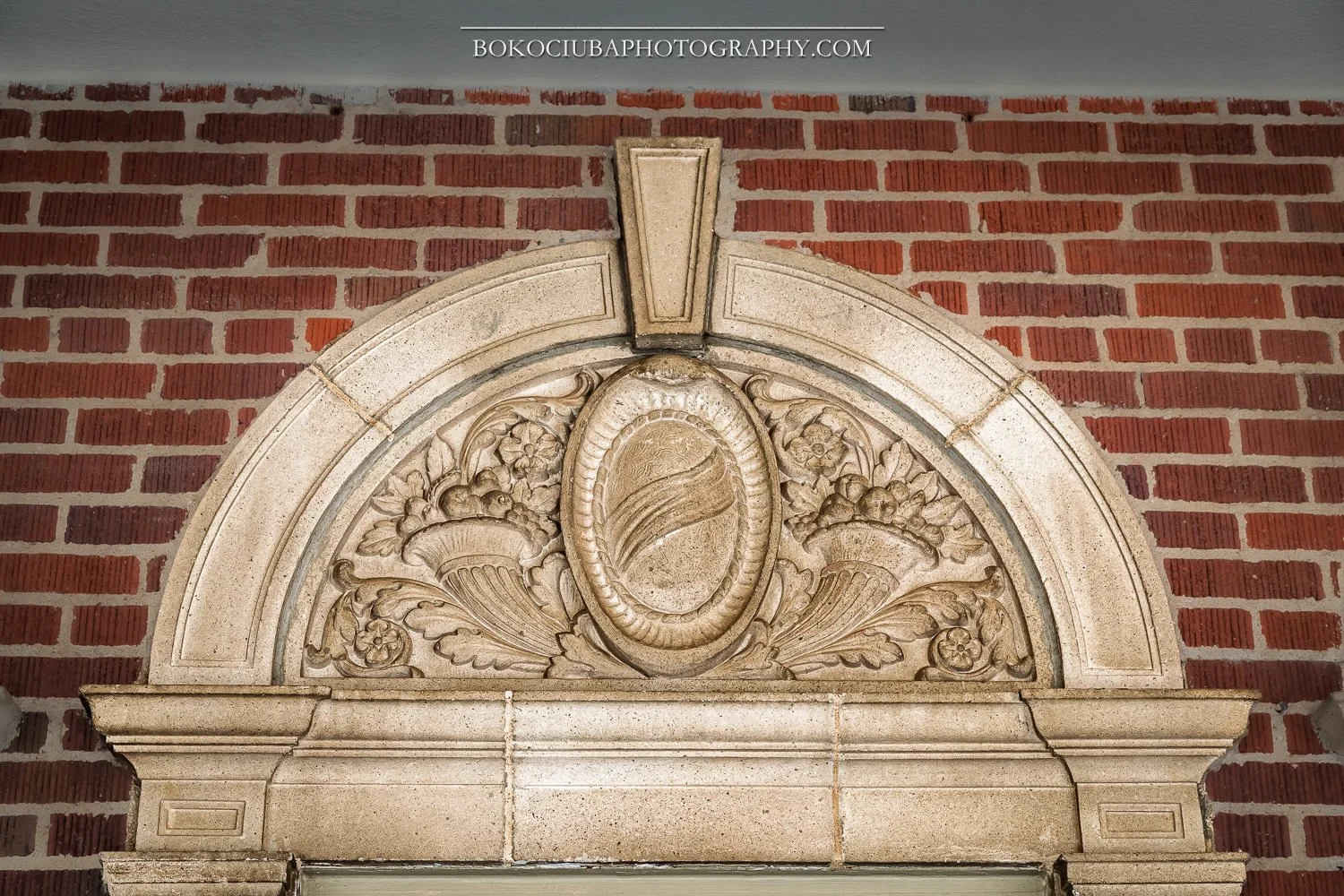
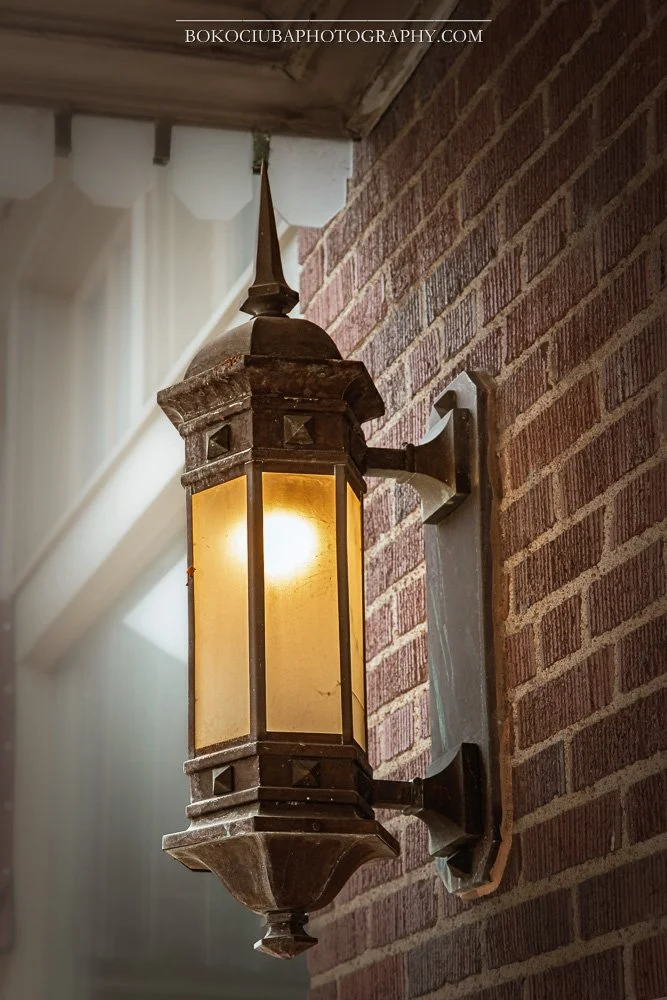
Post processing allows me to guide your eye toward what made me stop in the first place. I can shape the light, bring warmth into the old brick, recover details, correct perspective, quiet distractions and create a mood that feels closer to what I experienced standing there.
And although modern software gives photographers incredible tools, knowing what to do with them is a craft of its own. It takes years of learning about light, color, composition, masking, layers, sharpening—and knowing when to leave something alone. Sometimes the hardest decision is simply: Enough. It’s finished.
Did You Know?
The Aldridge Hotel — McAlester, Oklahoma
A good example is the Aldridge.
Standing at 200 East Carl Albert Pkwy, the 11-story Aldridge Hotel was built in 1929–1930.
It wasn't simply another hotel.
When it opened, the Aldridge was the only large full-service hotel in the region, and it became an important part of the economic, political and social life of southeastern Oklahoma. That significance helped earn it a place on the National Register of Historic Places in 1995.
The grand view, the entrance, the old lanterns, the wonderful decorative stonework above the doorway tell about the the character of the place and remind us that nearly a century ago, somebody cared enough to put beauty into details.
The Aldridge came dangerously close to disappearing altogether. After years of decline, demolition was a very real possibility. But people in McAlester stepped in, fought to preserve it, and ultimately saved and restored the building. Instead of being bulldozed and becoming another piece of Oklahoma history remembered only through old photographs, the Aldridge still stands today!
That’s one of the things I love about photographing Oklahoma. There are buildings, details and pieces of history all around us that deserve more than a passing glance.
And perhaps that is what photography is really about for me.
I love that.
Because preservation and photography really aren't that far apart.
Both ask us to notice something before it disappears. The camera records the scene. The photographer brings the vision to life.